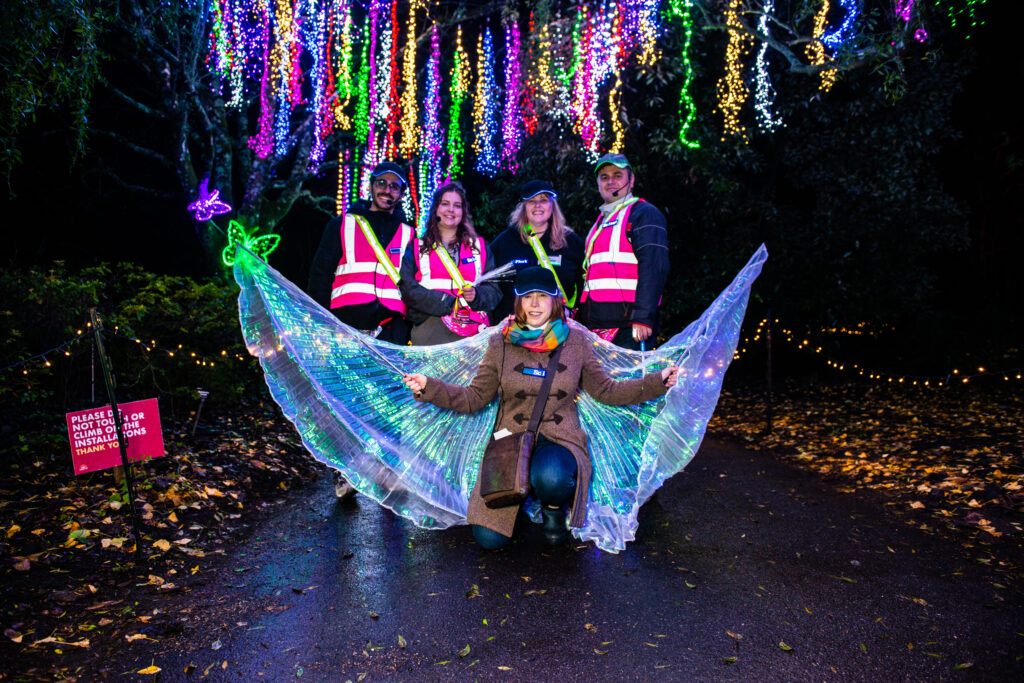
Do you want to see a rainbow?
This winter, the CORNERSTONE Public Engagement Team joined the magical Light Up Trails, an interactive art experience. This year’s theme is ‘Enchanted’ — a magical after-dark trail filled with light, atmospheric sound, and a festive feel. As visitors wandered through the glowing artworks, we walked the paths with them, sharing little bursts of photonics along the way.
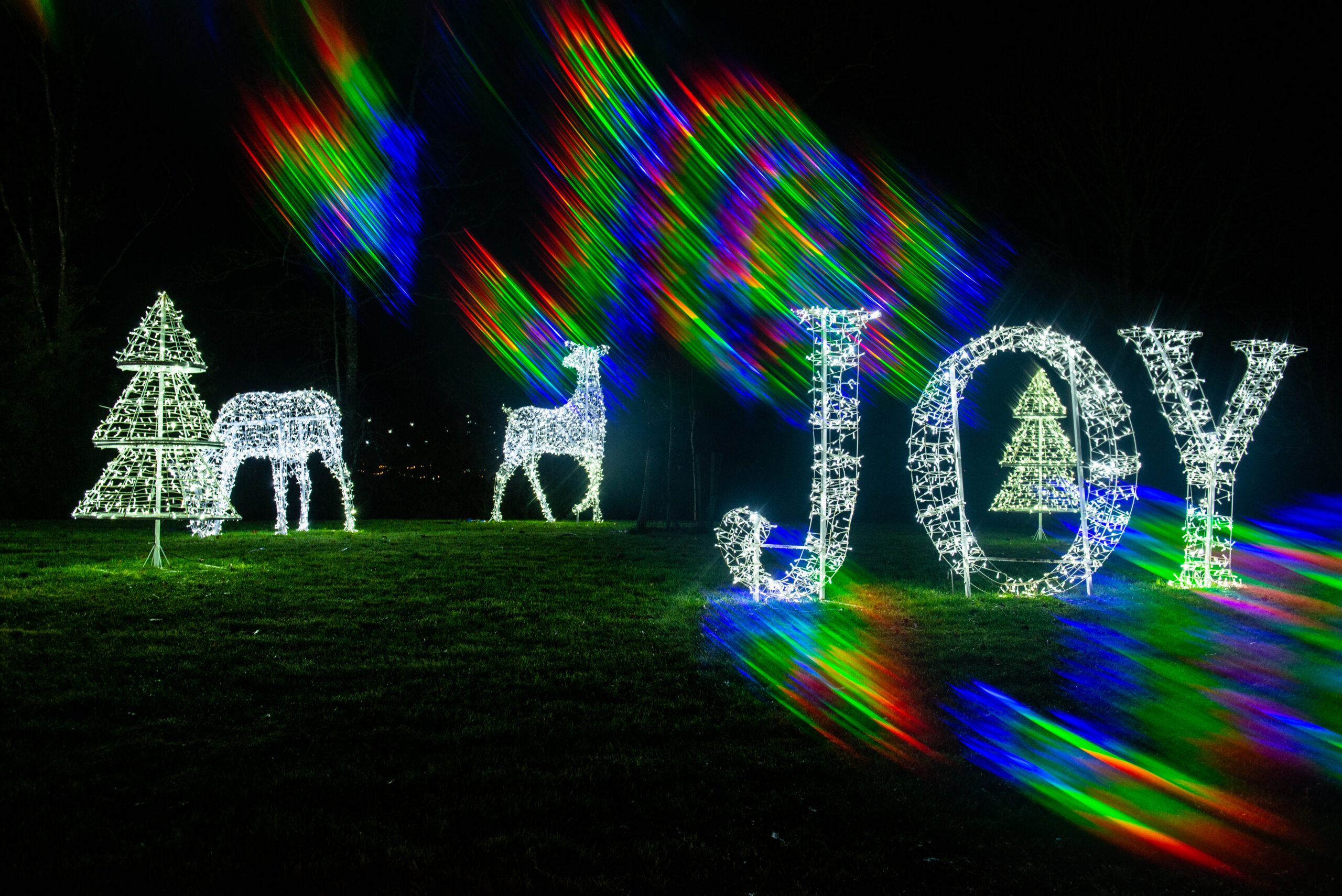
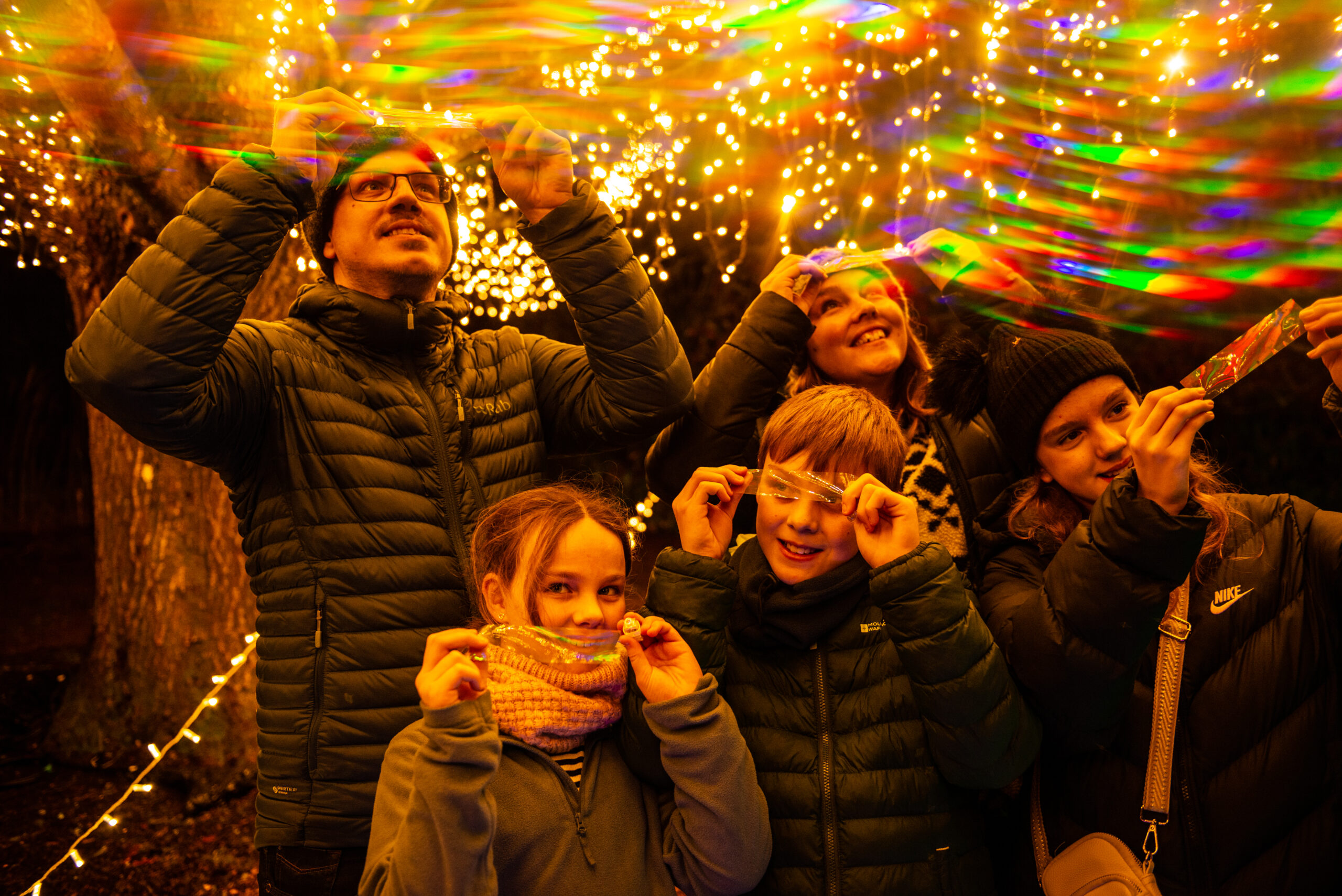
The diffraction gratings were an instant hit, so we always started with those.
A simple “Do you want to see a rainbow?” was enough to spark curiosity. When people held the gratings up to the installations, the white lights split into vivid spectra that shifted as they moved. A diffraction grating is a surface with thousands of tiny, evenly spaced grooves that separate light into its different wavelengths, creating a rainbow of colours. Many visitors used them in front of their phone cameras to capture rainbow-filled photos, and plenty took gratings home to stick in their windows and enjoy the colours later.
We also brought along some fibre-optic strands and, by shining a tiny LED finger light into one end, visitors could watch the light travel through the fibre and emerge clearly at the other. People were fascinated to see that the light stayed guided inside the strand, even when it was bent or twisted, thanks to total internal reflection. Many wanted to hold the fibres and try it themselves, which always led to great conversations.
For those interested in learning more about cutting-edge photonics technology, we shared how silicon photonics chips — like those fabricated by CORNERSTONE in the cleanroom here in Southampton — guide and process light through tiny waveguides etched into the surface. Displayed under magnification, visitors could see the chips and the microscopic structures up close, leading to discussions about how this technology enables ultra-fast communication and advanced sensing.
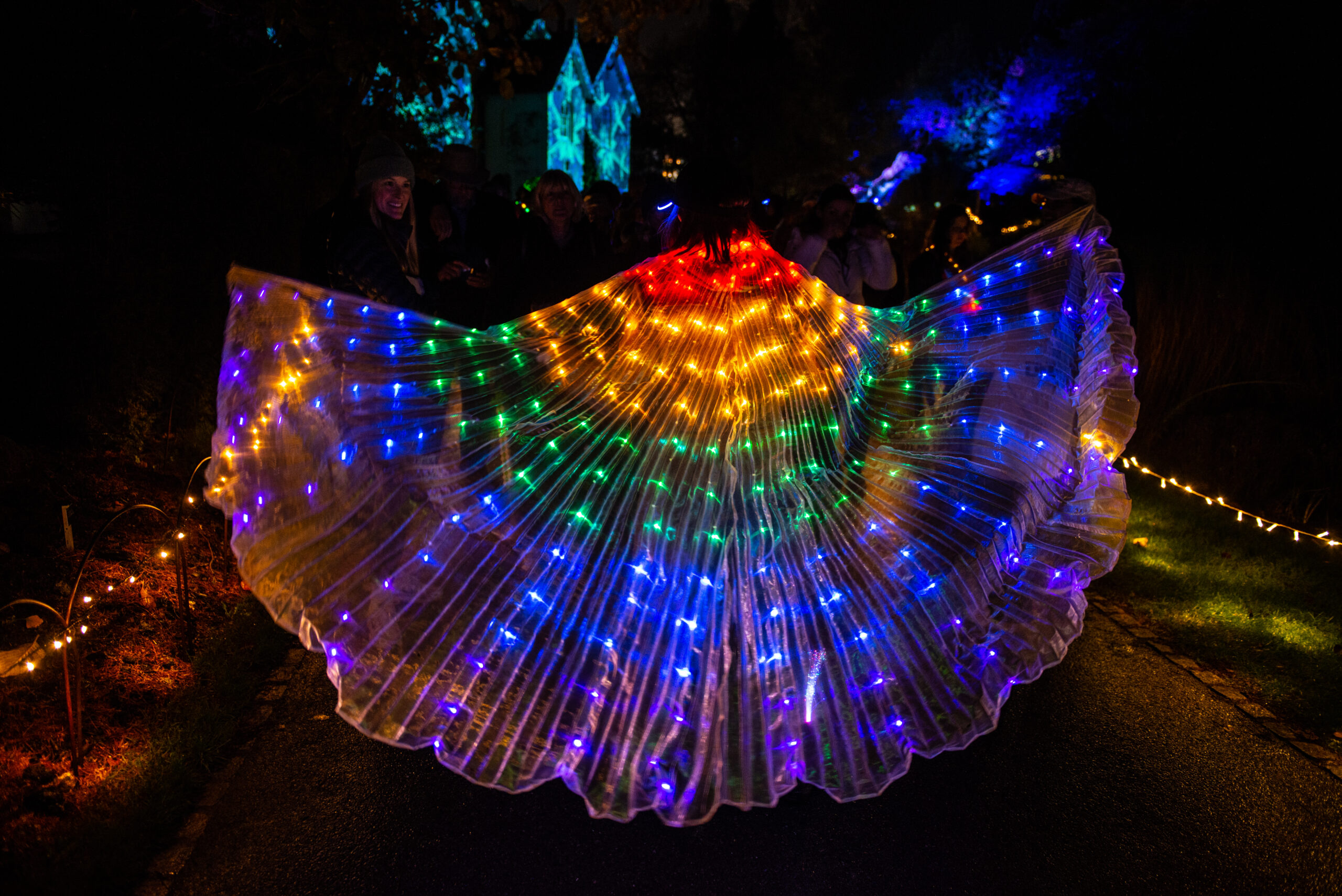
As one of our team members, dressed as the ‘Photonics Fairy’, explained to visitors: “Photonics is the science and technology of light — how we generate, control, and use it.”
It was wonderful to see that idea come to life as people explored the trail, holding diffraction gratings and enjoying the colourful displays all around them, some of which even resembled — or used — fibre optics.

As the evenings unfolded, it was clear that moments of shared curiosity mattered just as much as the lights themselves. By giving visitors simple ways to see and handle photonics in action, we helped turn a winter trail into an opportunity to explore how light works and why it matters.
We left Hillier Gardens encouraged by the conversations, the questions, and the sense of discovery that people of all ages brought with them. It was a reminder that engagement does not always begin in a laboratory — sometimes it starts with a walk in the dark, a spark of interest, and a rainbow held up to the light.