
Scaling Quantum Systems with Silicon Photonics: How C-PIC Supports the Next Generation of Quantum Technologies
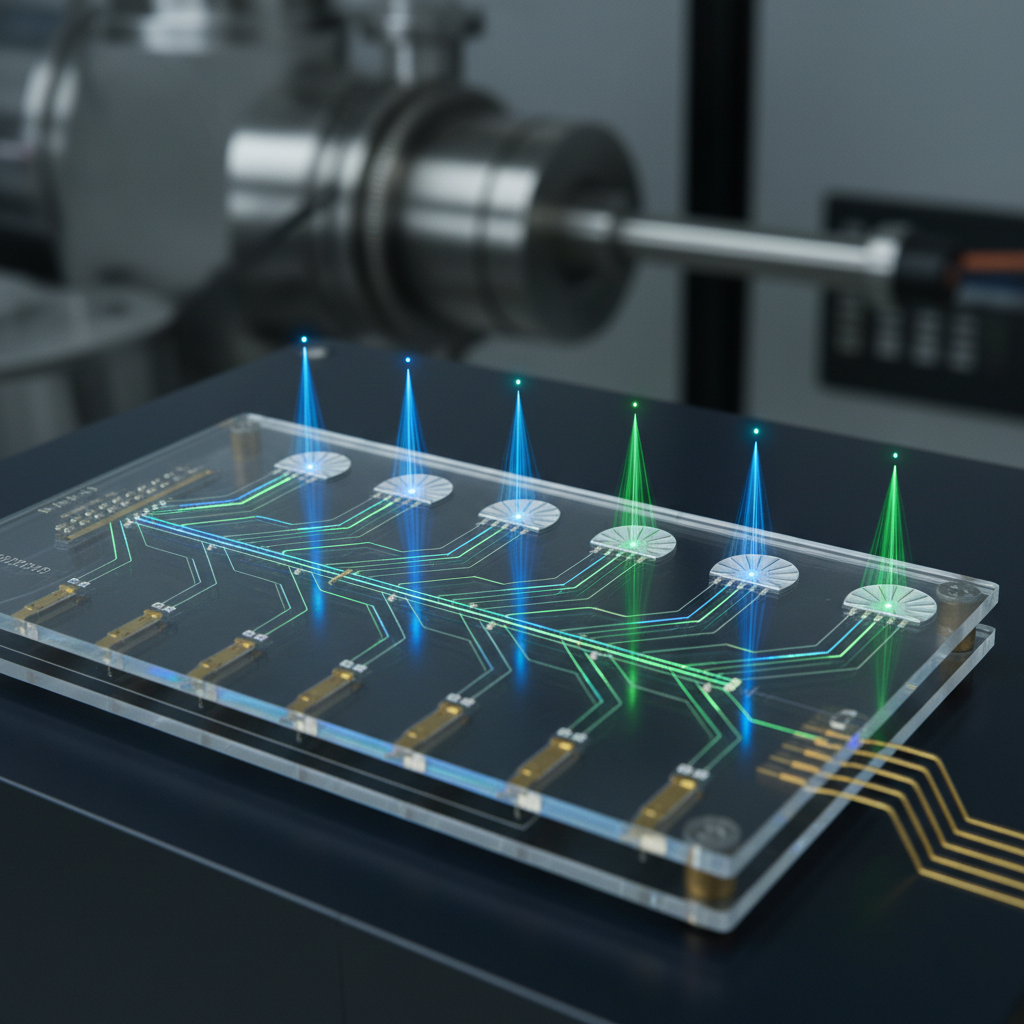
Quantum technologies are moving from theory toward real‑world impact, with the potential to transform numerous industries. Silicon photonics (SiPh) offers a credible route to scaling these systems by delivering precise, stable and reproducible optical control on chip, overcoming the size, complexity and instability of bulk free‑space optics as qubit counts grow. The UK is well placed to lead this shift, with strong academic hubs, dedicated quantum programmes and an emerging ecosystem focused on integrating thousands of tightly controlled laser beams into compact, scalable architectures.
This case study examines how the CORNERSTONE Photonics Innovation Centre (C‑PIC) is designed to convert that foundation into scalable quantum hardware by acting as the UK’s focal point for quantum‑driven SiPh innovation. As an Innovation and Knowledge Centre, C‑PIC combines industry‑aligned, CMOS‑compatible fabrication with design consultancy, standard component libraries, multi‑project wafer runs and targeted early‑stage funding to de‑risk experimentation and accelerate iteration. Projects such as Amit Agrawal’s work at the University of Cambridge on monolithic photonic arrays for large‑scale ion and atom addressing illustrate how SiPh can replace complex, hand‑aligned optical assemblies with compact, reproducible platforms tailored to quantum needs.
Quantum technologies promise fundamentally new approaches to computational problems that are intractable for classical systems, from the high-fidelity simulation of complex molecular dynamics and materials for drug discovery and energy, to optimisation problems in logistics and finance. Governments and corporations worldwide are investing heavily in this field, recognising its potential as both a strategic and economic differentiator. The UK is no exception, with significant funding and industrial engagement aimed at building an ecosystem capable of delivering practical quantum systems.
Unlocking this potential requires exceptional control over quantum bits, or qubits, which are inherently fragile and prone to error. Delivering reliable performance demands practical solutions that can achieve the precision, stability, and reproducibility necessary for large-scale quantum hardware. Silicon photonics (SiPh) is uniquely positioned to meet these needs, offering integrated, chip-scale solutions that can manipulate, route and deliver light to individual qubits with the accuracy required for complex quantum operations.
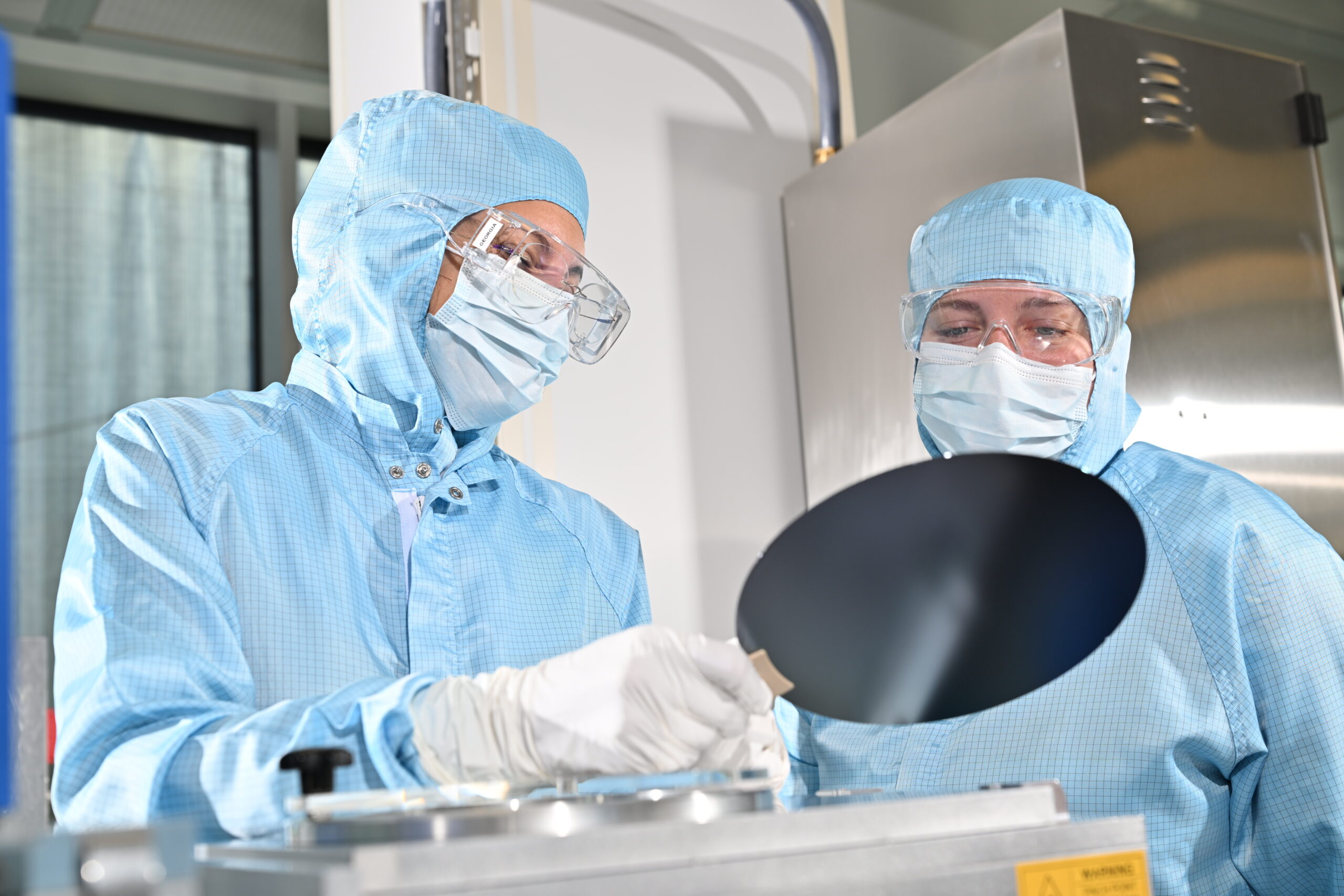
Progress depends on enabling infrastructure, including access to advanced fabrication, rapid prototyping, and coordinated research platforms. In the UK, the CORNERSTONE Photonics Innovation Centre (C-PIC) aims to provide this foundation, connecting SiPh innovation directly to the practical requirements of quantum technologies and supporting the development of scalable, deployable systems.
Mapping the Quantum Landscape – Current State and Potential Value
To support a market as complex as quantum technologies, it is essential to understand both its current state and the potential value it promises. Quantum systems are no longer purely theoretical; a variety of physical platforms are actively being explored, each with distinct technical requirements and scaling challenges. Among the leading quantum computing platforms where SiPh can play a decisive role are trapped ions, neutral atoms, and photonic qubits. Trapped ion systems confine individual ions using electromagnetic fields, with quantum information encoded in the ions’ internal states. Neutral atom systems use optical tweezers to hold and manipulate atoms, relying on finely tuned laser beams to entangle and read out qubit states. Photonic qubits, in contrast, encode information directly in the quantum states of photons themselves, often for communication or networked quantum processing.
Each platform depends on highly precise optical control: multiple laser beams must be delivered with exact spatial alignment, wavelength selection, and stability to manipulate qubits reliably. These optical requirements highlight where integrated photonics becomes critical, providing compact, scalable, and reproducible solutions for beam delivery, multiplexing, and alignment – tasks that are otherwise achieved with bulky free-space optics.
The potential applications are already driving significant strategic and commercial investment. Quantum-enhanced simulation could transform materials discovery, enabling chemists and engineers to model complex molecular interactions far beyond classical capabilities. Optimisation problems in logistics and finance stand to benefit from orders-of-magnitude improvements in solution efficiency, while advances in AI could leverage quantum algorithms for faster training and more capable models. For these benefits to be realised, scalable and reliable hardware is critical: the physical platforms must deliver high-fidelity operations with reproducible performance.
The UK is actively cultivating the infrastructure to support these demands. Academic hubs such as Cambridge, Oxford, and Bristol are conducting world-leading research, while programmes under UK Research and Innovation (UKRI) and Innovate UK provide targeted funding to reduce early-stage technical risk. Focal points like QCi3, a hub for quantum computing, foster collaboration between universities, industry, and fabrication facilities, enabling rapid iteration and validation of experimental designs. Within this landscape, SiPh addresses one of the most pressing bottlenecks: the delivery of thousands of precisely controlled laser beams, across multiple wavelengths, with minimal loss and stable performance in compact, integrated layouts.
Quantum technologies are now entering a phase where the technical promise is clear, yet practical deployment requires solutions tuned to the challenges of each hardware modality.
Quantum Hardware Challenges and Silicon Photonics Solutions
Scaling quantum systems from laboratory setups to deployable machines presents a host of hardware challenges, rooted in the fragility and complexity of qubits themselves. High-fidelity operations demand extraordinary control over optical fields, environmental conditions, and timing, and even minor deviations can quickly degrade performance.
Among the most demanding aspects is the delivery of light to individual qubits: each photon of the right wavelength must arrive at the right place, with precise directionality, polarisation and power stability. Traditional free-space optics, including manually assembled bulk mirrors, lenses, waveplates and beam splitters, can achieve this in smaller setups, but such setups quickly become unwieldy as qubit counts rise into the hundreds or thousands. Aligning multiple beams by hand is time-consuming, sensitive to vibration, and prone to drift, making it a major bottleneck for scaling.
SiPh provides a compelling solution to these challenges by integrating waveguides, modulators, and other optical components onto a single silicon chip, delivering precise beam routing in a reproducible, compact form. In essence, silicon photonics (SiPh) uses light to carry and manipulate information on-chip, much like electrical signals in conventional microelectronics, enabling high-speed, low-loss optical control in a small, scalable footprint. Moreover, CMOS-compatible fabrication ensures that each device is produced to tight tolerances, reducing variability between chips and enabling predictable system behaviour – a necessity for high-fidelity quantum operations.
Loss and fabrication tolerance remain a critical consideration, and even sub-percent variations in waveguide dimensions can affect beam power and phase, which in turn impacts qubit fidelity. Fabrication-aware PIC design—where layouts and tolerances are optimised to compensate for predictable deviations—ensures robust operation across multiple iterations.
In this landscape, SiPh can provide the technical foundation to stabilise multi-qubit operations and integrate the diverse optical functions quantum systems demand. The challenge now lies in refining these designs through prototyping and iteration – the step that transforms enabling technology into deployable hardware.
Role of C-PIC and Research in Supporting Quantum-Driven SiPh
As the UK’s dedicated Innovation and Knowledge Centre (IKC) for silicon photonics (SiPh), the CORNERSTONE Photonics Innovation Centre (C-PIC) is focused on transforming outstanding research into scalable, industry-ready solutions, including for quantum systems. Its comprehensive ecosystem includes flexible fabrication, design consultancy, standard component libraries, start-up support, networking events, and dedicated online resources.
Alongside this infrastructure, C-PIC provides targeted support through its Innovation Fund. Backed by the Engineering and Physical Sciences Research Council (EPSRC), this support enables researchers to progress high-potential ideas from concept to prototype while reducing the risks associated with early-stage exploration. One of the first projects funded through this programme is the ‘Photonic Array for Highly-efficient Large-scale Ion Addressing’, led by Amit Agrawal, Associate Professor in Optical Engineering at the University of Cambridge. Agrawal, whose background spans ultrafast optics, nanofabrication, and integrated photonics, is developing new approaches that combine photonic integrated circuits (PICs) and metasurfaces into a monolithic platform.
This integration directly addresses one of the most significant barriers in trapped ion and neutral atom quantum computing: the delivery of hundreds of laser beams, across multiple wavelengths, with the accuracy and stability required for reliable qubit manipulation. By embedding beam routing, wavelength control, and polarisation management within a monolithic photonic device, his work offers a compact and reproducible alternative to today’s bulky, hand-aligned optical assemblies.
Meeting these goals demands an extraordinary level of precision. Each laser must maintain exact polarisation, and spatial alignment, as even minor deviations can compromise qubit fidelity. Multiple wavelengths must be managed simultaneously to address the different energy transitions of the atoms, while beam stability and alignment must be preserved over time to ensure consistent operation. By consolidating these functions onto a single SiPh platform, Agrawal’s work simplifies the optical architecture while providing a more scalable technology foundation.
The pathway from concept to deployable hardware is another area where C-PIC plays a crucial role. Multi-project wafer (MPW) runs allow multiple designs from different research teams to be fabricated on a single wafer, dramatically reducing the cost and lead time compared with dedicated, full-wafer fabrication. This approach provides researchers like Agrawal with rapid access to high-quality, CMOS-compatible photonic devices, enabling iterative testing of layouts, tolerances, losses, and integration strategies.
Furthermore, C-PIC continually reviews and updates its MPW technology platforms to ensure they meet the evolving requirements of cutting-edge applications, including quantum technologies, where precision, reproducibility, and multi-wavelength operation are essential. Coupled with early-stage funding and design support, this infrastructure helps to de-risk experimentation and accelerate progress toward scalable, quantum-ready SiPh solutions.
Conclusion: Enabling the Next Quantum Leap
Quantum technologies promise transformative breakthroughs across computation, simulation, and sensing, tackling problems that remain intractable for classical systems. Realising this potential, however, requires solutions to complex optical and photonic challenges.
Enabling technologies such as SiPh are central to addressing these challenges, offering integrated, chip-scale platforms capable of precise beam routing, wavelength management, and system-level stability. Even the most advanced devices, however, rely on coordinated research infrastructure to transition from laboratory prototypes to deployable systems. C-PIC, the UK’s dedicated Innovation and Knowledge Centre for SiPh, provides this ecosystem through access to fabrication, design tools, funding, and collaborative networks. Projects supported through its Innovation Fund, including work by Amit Agrawal, demonstrate the impact of this support.
By linking SiPh innovation directly to the technical requirements of quantum hardware, platforms like C-PIC are helping ensure that the next generation of quantum technologies are not only technically feasible but also scalable, reproducible, and ready for real-world application.