
How silicon photonics could power next-generation AI systems: TechRadar Pro Interviews Professor Graham Reed
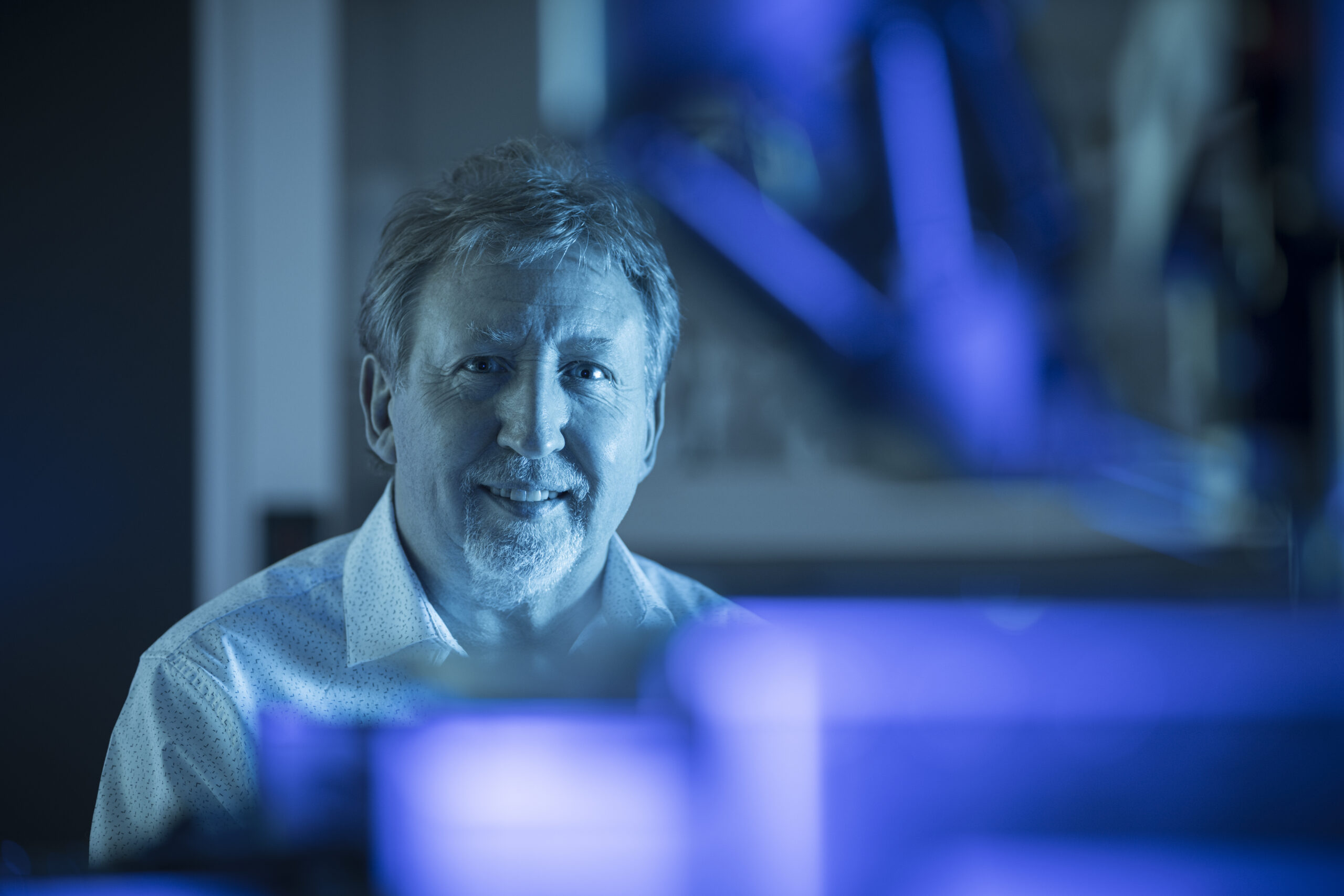
AI’s energy problem isn’t about raw compute – it’s about moving data. Getting information between processors, memory, and data centres fast enough, and without burning through enormous amounts of power, is where today’s systems are starting to crack. Silicon photonics uses light rather than electricity to carry that data, and it’s attracting serious investment and attention as a result. TechRadar Pro interviewed Professor Graham Reed, Director of CORNERSTONE, on the technology’s growing role in AI infrastructure, what Nvidia’s public commitment to it means for the industry, and what it would take for the UK to build a genuinely world-leading position in the field.
The goal is to build a globally significant innovation platform and ecosystem for silicon photonics
Professor Graham Reed, Director of CORNERSTONE
Here are some key takeaways from the interview:
- The real bottleneck isn’t compute. AI systems are hitting limits not because processors are too slow, but because shifting data between chips and data centres uses too much power and takes too long. Optical connections are considerably more efficient than copper wires for this, which is why we’re seeing a rise in investment in photonics.
- Nvidia has already committed. At GTC 2026, Jensen Huang confirmed the Spectrum-X Switch – the networking core of Nvidia’s AI-specific Ethernet fabric – will use co-packaged optics. Nvidia’s own figures suggest integrated photonics could improve power efficiency fivefold.
- CORNERSTONE’s open model is a deliberate strategic choice. Rather than licensing IP, CORNERSTONE operates as a licence-free, open-source foundry – designed to get more researchers and startups experimenting faster. The goal is an ecosystem, not a product.
- The UK needs infrastructure, not just expertise. World-class research exists. What’s missing is a National Silicon Photonics Pilot Line – a semi-industrial facility where designs can be developed to the point of actual manufacture, not just proof of concept.
- AI is the headline. The technology is much broader. Silicon photonics also underpins quantum communications, biomedical diagnostics, environmental sensing, and LiDAR for autonomous vehicles.
To read the full interview, visit – TechRadar Pro