
Why the International Day of Light Matters More Than Ever!
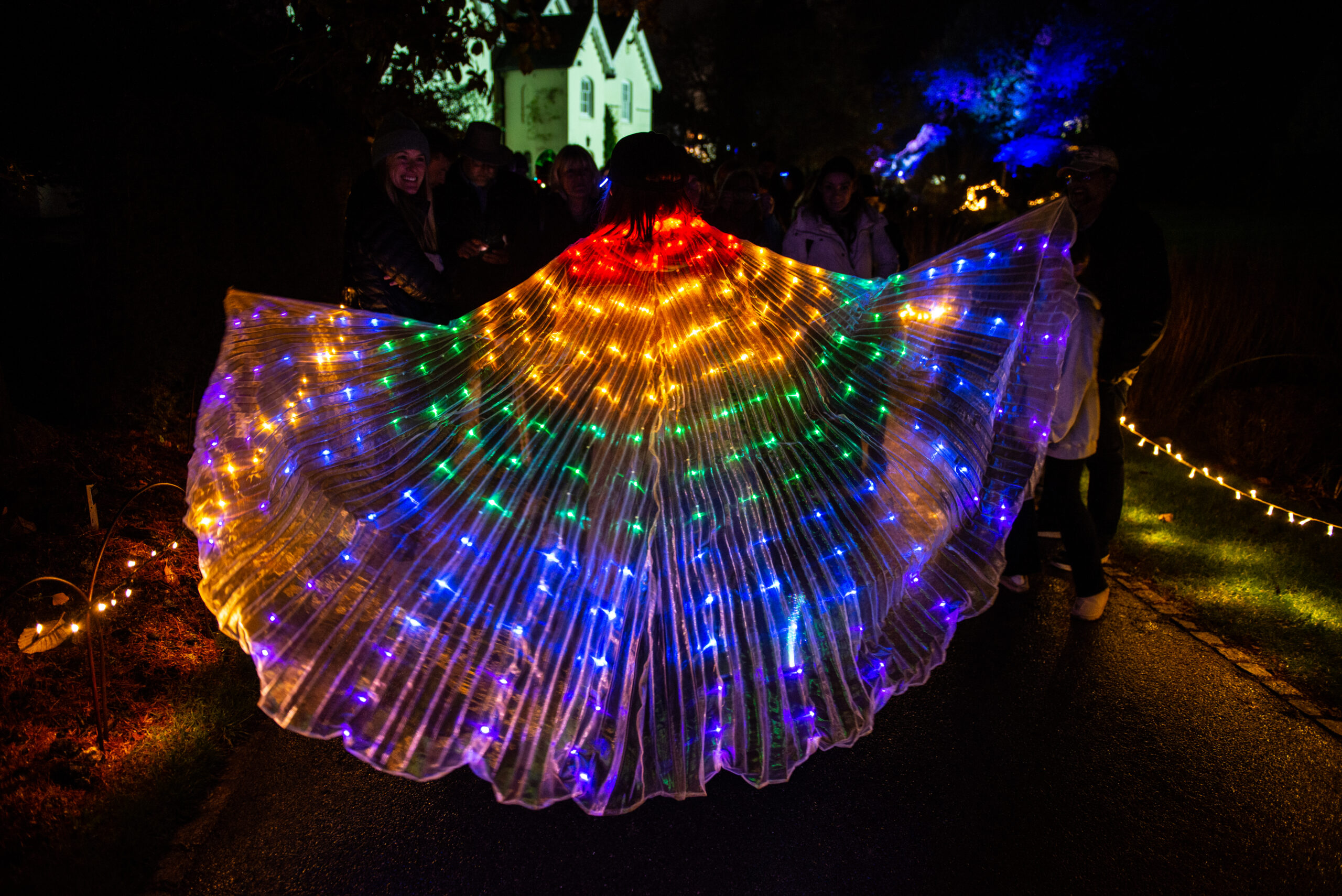
Every year on the 16th May, the world celebrates the International Day of Light, formally established by UNESCO, highlighting the fundamental role of light-based technologies in advancing science and innovation. It invites people worldwide to get involved in activities that highlight how science, technology, art, and culture contribute to UNESCO’s aims, such as promoting education, fairness and peace.
The date is no coincidence. It marks the anniversary of the first successful laser operation in 1960 by Theodore Maiman, a renowned physicist and engineer. The laser is a perfect example of how a scientific discovery can yield revolutionary benefits to society in communications, healthcare and many other areas.

Theodore Maiman with the world’s first laser. This image is licensed under the Creative Commons Attribution-Share Alike 4.0 International license.
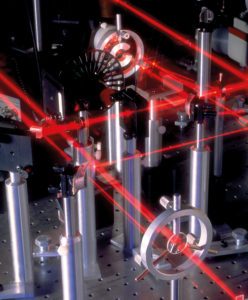
From sustaining life through photosynthesis to enabling global communication via fibre optics, light underpins both the natural world and modern technology. In silicon photonics, light is routed on-chip to transmit information at very high speeds, enabling low-power, high-bandwidth data transfer in modern digital systems and data centres.
Events such as the International Day of Light provide an opportunity to celebrate the importance of light in technology, culture, and everyday life. Hands-on activities in photonics, “the science and technology of light,” offer an engaging way to explore how light shapes the modern world while turning scientific concepts into memorable and interactive experiences.
Most of us rely on light-based technologies every day without ever seeing how they work. That’s where public engagement plays an important role. Hands-on activities in photonics, ‘the science and technology of light’ are one of the most effective ways to turn scientific theory into experiences that are memorable and fun!
One of CORNERSTONES favourite examples?
A spectroscope.
What Is a Spectroscope?
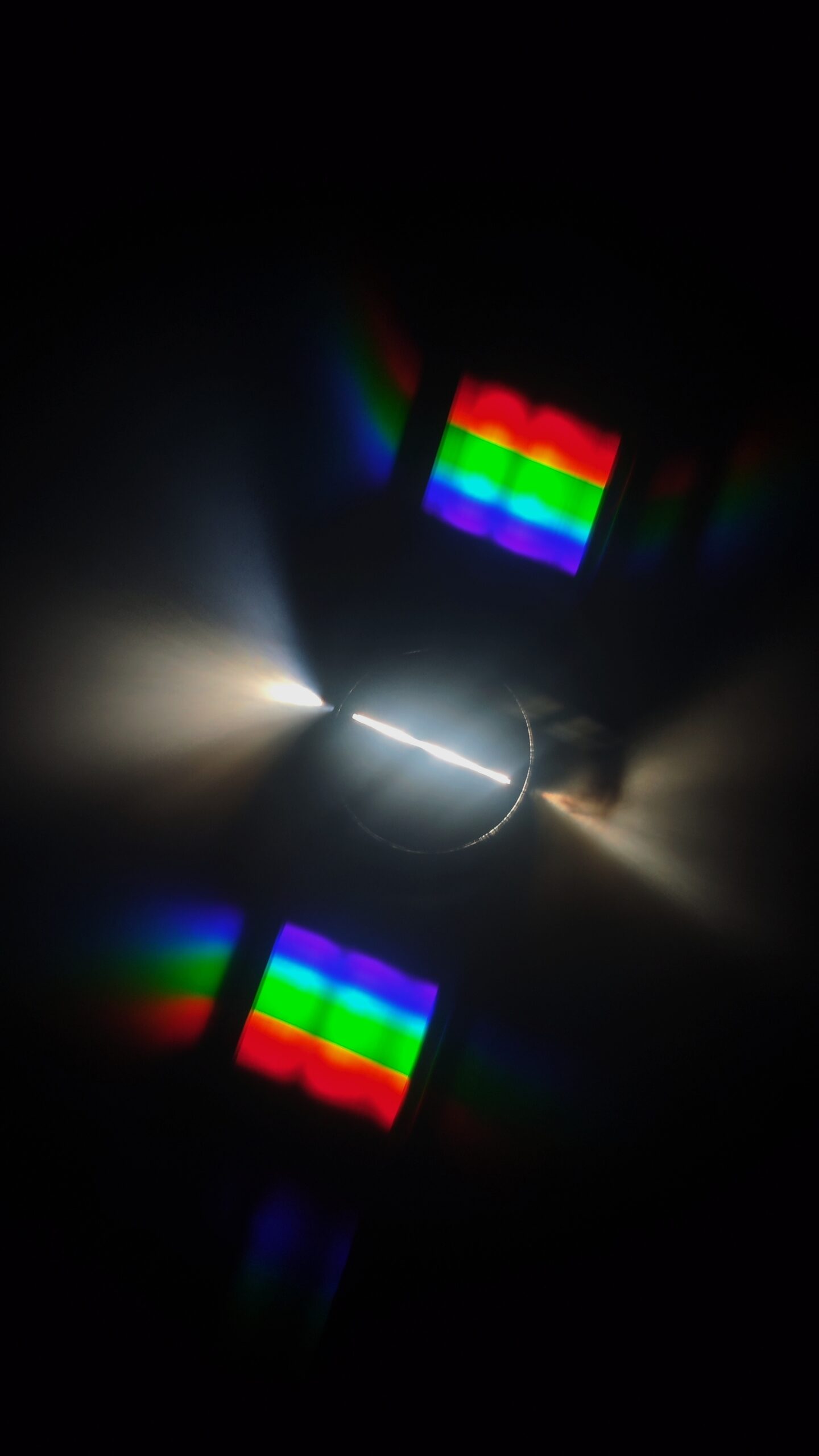
A spectroscope is a scientific instrument that works by directing light through an optical element, usually a prism or diffraction grating, that separates the light into its component wavelengths. Because different wavelengths bend or diffract by different amounts, the light spreads into a continuous spectrum of colours that can be observed or measured. Different light sources, such as sunlight, LEDs, and fluorescent lamps, produce distinct spectral profiles. These patterns are widely used to extract information about how light interacts with matter. For example, astronomers use spectroscopes to identify the gases present in stars by analysing their spectral lines, while photonics researchers use spectroscopy to characterise the emission spectra of lasers.
How to Make a Simple Spectroscope
You’ll need:
- A CD or DVD (acts as a diffraction grating)
- A cardboard tube, such as a Pringles tin, kitchen roll tube, or toilet roll tube
- A small square of cardboard
- A pair of scissors or craft knife (for safety, ask an adult to use the craft knife)
- Tape
- Two different light sources or light bulbs
Steps:
- Cut a very thin slit near one end of the cardboard tube at a slight angle (about 45°). This slit allows a narrow beam of light to enter the spectroscope.
- Cut a small viewing hole directly opposite the slit on the other side of the tube.
- Place a CD or DVD inside the tube at an angle, ensuring the shiny side faces inward. This will reflect and spread the incoming light.
- Trace one end of the tube onto a piece of cardboard and cut out the circle to create a tube cover.
- Cut a straight slit across the centre of the cardboard circle. This helps hold the disc in place and reduces unwanted light entering the tube.
- Attach the cardboard circle to the end of the tube using tape. Make sure all gaps are sealed to prevent stray light from entering.
- Point the slit toward a light source and look through the viewing hole. Compare different light sources such as LEDs, fluorescent lamps, incandescent bulbs, or sunlight (never look directly at the sun through the spectroscope, as it can damage your eyes).
What you’ll see:
Your home-made spectroscope allows light to enter through a narrow slit and reflect off the surface of a CD or DVD. The tiny grooves on the disc act as a diffraction grating, causing the light to separate into a spectrum that reveals the different wavelengths (bands of colour) emitted by the light source.
So, this 16th May, don’t just celebrate light, explore it, use it, and share what you learn.
You can find more information about the International Day of Light on the UNESCO page: https://www.unesco.org/en/days/light